
Updated 2026-11-26 · Lubbock Rodent Control
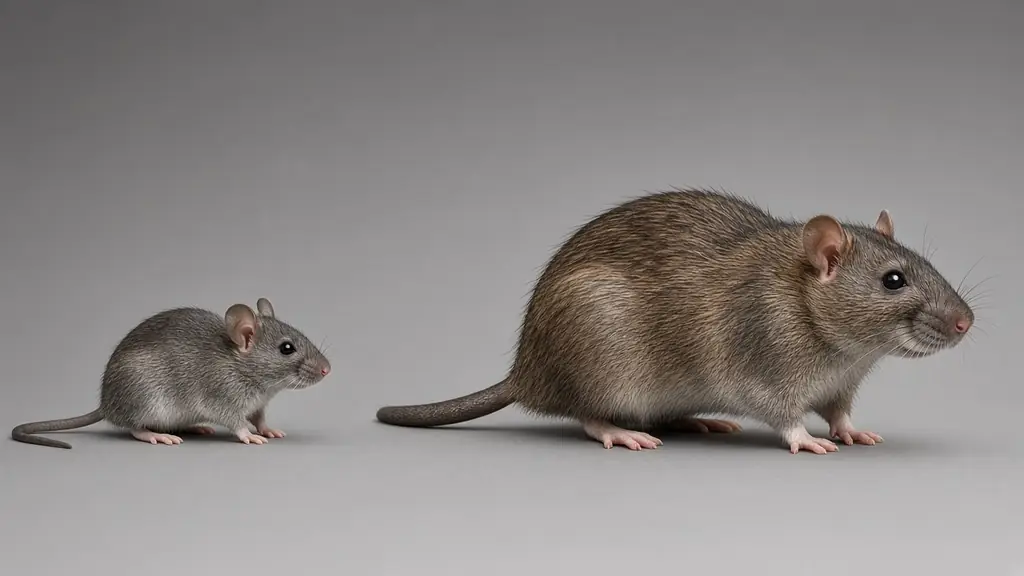
Mice and rats need different treatment. Rats need bigger traps, a different approach to bait, and often burrow work outside, while mice need attention to much smaller gaps. Knowing which one you have makes the whole job faster.
The rodents you are most likely to meet in Lubbock
House mouse
The most common indoor rodent in the region. Adults are small, about 2.5 to 3.5 inches long plus a tail of similar length, gray-brown, with large ears and small feet. They nest close to food, inside walls, cabinets, appliances and storage boxes, and can squeeze through a gap about 1/4 inch wide.
Norway rat
Also called the brown rat or sewer rat. Much heavier than a mouse: a body of 7 to 10 inches, a blunt nose, small ears and a thick tail that is shorter than the body. Norway rats burrow, so they live along foundations, fences, alleys, drainage channels and sewer lines, and come indoors through sheds, garages and crawlspaces. They need a gap of about 1/2 inch.
Roof rat
Slimmer and darker than the Norway rat, with a tail longer than its body, and a climber rather than a burrower. Roof rats are far more common in southern states and only occasionally reported around Lubbock; most rats here are Norway rats.
Deer mouse and white-footed mouse
Two-toned mice with white bellies and feet. They are more common at the wooded edges of the metro area, in barns, sheds, cabins and garages, and they matter because deer mice can carry hantavirus. Clean up their droppings with extra care (wet them first, never sweep them dry).
Squirrels
Eastern gray and fox squirrels are rodents too. They get into attics through holes in soffits, roof returns and vents. Daytime noise in the attic, especially early morning and late afternoon, is a classic squirrel sign.
Quick comparison
| House mouse | Norway rat | |
|---|---|---|
| Body length | 2.5–3.5 in | 7–10 in |
| Droppings | 1/8–1/4 in, pointed | 1/2–3/4 in, blunt |
| Smallest gap | about 1/4 in | about 1/2 in |
| Where they live | Inside walls, cabinets, attics | Burrows outside, sheds, sewers |
| Behavior | Curious, explores new objects | Cautious, avoids new objects at first |
Why identification changes the plan
Mice are curious, so well-placed traps work quickly. Rats are wary of anything new, so traps are often set unbaited or pre-baited for a few days before they are armed. Rats also need outdoor work: burrow treatment, removing harborage and fixing larger openings such as broken foundation vents and gaps under garage doors.
If you are not sure, take a photo of the droppings next to a coin and mention where you found them when you call. That is usually enough to tell.
Get a free rodent inspection
Tell us what you are seeing and where. We will book a free inspection with a licensed local technician.
Call (806) 552-2428